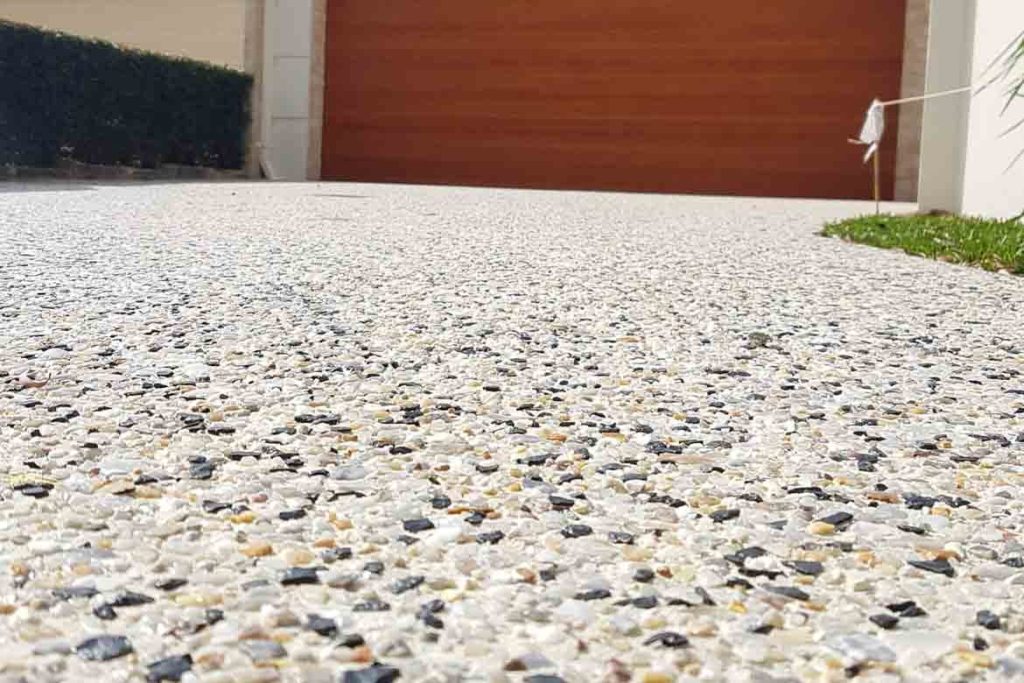
Aggregate driveways have a strong appeal because they answer several practical concerns at once. The finish combines exposed stone, cement, and careful surface treatment to create texture, visual depth, and reliable footing. Across Australian suburbs, owners often choose this option for its steady performance in heat, rain, and repeated vehicle use. This broad appeal rests on daily function, modest upkeep, and a look that works with both older homes and newer facades.
Street Appeal
Street appeal matters, but owners also want a surface that ages without looking tired after one wet season. A well-laid aggregate concrete driveway usually softens the stark effect of plain grey paving, while still giving the frontage a clean, ordered finish. Buyers often read that texture as a sign of care, as the driveway frames the garage, garden edge, and entry path in a single view.
Built for Traffic
Driveways absorb constant pressure from tyres, bins, footfall, and shifting weather. Such repeated strain can expose weak finishes very quickly. Aggregate tends to mask small scuffs because the stone pattern breaks up surface marks that would stand out on plain concrete. For households with several vehicles, this attribute matters. A tidier appearance over time often makes the material feel worth the added upfront spend.
Grip and Safety
Grip remains a major reason this finish receives broad support. The exposed surface creates traction under shoes and tyres, especially during rain or after sprinklers have run. That extra hold can matter on sloped sites, narrow entries, or homes used by older relatives. Smooth paving may look crisp at first glance, yet a lightly textured driveway often feels safer during ordinary movement in changing weather.
Design Range
Visual choice also helps explain its strength and durability.
Stone Choices
Different mixes can include river pebbles, crushed quartz, granite, or shell. Each blend changes colour, texture, and reflectivity in distinct ways. A softer mix can suit weatherboard homes, while sharper stone shapes often pair well with modern brick or rendered walls. As the finish can read muted or bold, owners usually find an option that links paths, edging, and facade materials without forcing a staged result.
Heat and Glare
Heat response also shapes driveway decisions in warmer parts of Australia. Broad paved areas can bounce harsh light toward windows, doors, and front steps. Some aggregate blends, especially paler ones, reduce that glare and create a gentler visual effect across the frontage. The change is subtle rather than dramatic, yet many households notice that the space feels calmer and less stark during long dry spells.
Practical Care
Maintenance stays manageable when sealing and cleaning follow a sensible routine.
Basic Care
Regular sweeping removes grit before it grinds into the finish. Occasional washing lifts dirt that settles around exposed stone and can dull the overall surface tone. A fresh seal every few years helps preserve colour and limits water entry into fine pores. Most owners find that a realistic care schedule supports appearance and service life without turning driveway care into a constant household chore.
Long-Term Value
Initial cost often sits above standard concrete because installation involves selected stone and extra finishing steps. Even so, many owners accept that difference after weighing appearance against service life. Early replacement of a weaker surface can become more expensive than choosing a harder-wearing option from the start. Over several years, aggregate often holds perceived value well, especially when resale depends on a neat first impression.
A Strong Local Fit
Australian homes often place the driveway in full street view, close to the garage, front garden, and main entry. Such visibility gives the surface a stronger visual role than many owners expect at first. Aggregate suits this setting because it bridges utility with finish quality. On suburban blocks, it can also tie together paths, steps, and pool surrounds, which makes the exterior feel more coherent.
Installation Still Matters
Popularity does not remove the need for sound workmanship. Base preparation, drainage, joint placement, curing time, and sealing each affect long-term performance. A poor pour can crack, shift, or drain badly, even if the stone blend looks attractive on day one. Careful owners usually ask how the slab will handle slope, traffic load, and local conditions before making a final choice on colour or texture.
Conclusion
Aggregate driveways remain popular because they meet practical and visual needs without asking for difficult upkeep. They offer grip, surface variation, and steady durability, while giving the front of a home a more settled appearance. Plain concrete still has a place, yet it rarely offers the same balance of texture and longevity. For many properties, aggregate continues to feel like a sensible choice built on everyday performance.