Bathroom flooring carries more than visual weight. It affects traction, drainage, hygiene, thermal comfort, and how calmly the room feels during daily routines. A good tile choice begins with assessing moisture behaviour, surface grip, scale, colour, and cleaning demands. Every decision should serve the household first, then the design scheme. With careful selection, a bathroom floor can feel composed, practical, and visually settled for many years.
Start With Room Use
A family bathroom faces wet feet, soap residue, dropped towels, and frequent mopping. Homeowners comparing bathroom floor tiles Melbourne options should review slip rating, tile format, grout spacing, and surface texture before selecting a pattern. Those details influence safe movement, cleaning effort, drainage performance, and the way light travels across the finished floor.
Match Material to Moisture
Moisture resistance should guide the selection process. Porcelain performs well on floors because its dense body absorbs very little water. Ceramic can suit lighter-use bathrooms, provided the product is rated for floor installation. Natural stone offers mineral variation, but it usually needs sealing and gentle cleaners. Material choice should reflect traffic, ventilation, water exposure, and maintenance discipline.
Choose the Right Finish
Finish influences both safety and atmosphere. Polished surfaces brighten compact rooms, yet they can become slippery and show water spots. Matte tiles soften glare and provide steadier footing. Light texture helps near showers, baths, and vanities, where splashes collect. Deep relief may trap soap film, so grip should be balanced with cleaning access.
Consider Tile Size
Tile size affects drainage, grout frequency, and perceived space. Large formats create fewer joints, which can make narrow bathrooms appear calmer. Smaller pieces suit sloped floors because they follow the falls around the waste with less cutting. Mosaics can be helpful inside showers, especially where water needs precise movement. Room shape and outlet placement should guide scale.
Plan Colour Carefully
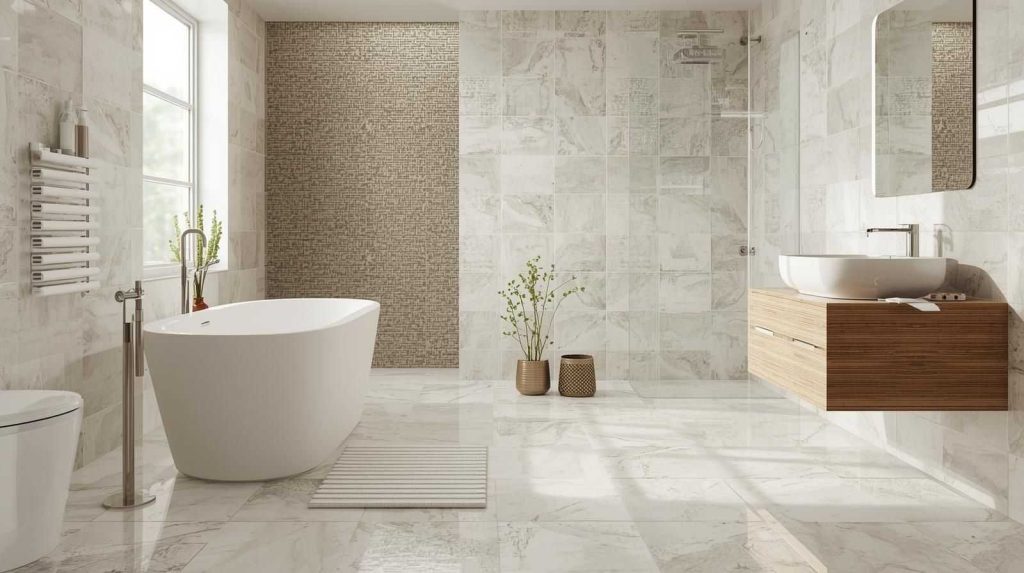
Colour influences light, maintenance, and mood. Pale stone, warm white, soft grey, and muted clay tones can make tight rooms feel more open. Deep charcoal or graphite adds contrast, but dust and dried droplets may appear quickly. Mid-tone floors often provide the most forgiving daily surface. The right shade should support lighting, fixtures, and cleaning habits.
Use Pattern With Control
Pattern works best when it has a clear role. Terrazzo flecks can soften a plain room, while concrete-look tiles add quiet texture. Encaustic-inspired designs need restraint because repeated motifs draw attention fast. If the floor carries strong movement, walls, tapware, and cabinetry should stay calmer. Visual balance helps the bathroom feel orderly rather than crowded.
Check Slip Resistance
Slip resistance is a health and safety issue, especially in wet rooms. Soap, bare feet, and smooth surfaces reduce friction within seconds. A suitable rating helps protect children, older adults, and visitors with reduced balance. Product specifications should be checked before colour decisions are final. Comfort underfoot matters, but secure footing carries greater daily value.
Think About Cleaning
Maintenance begins with grout, texture, and tone. Narrow joints usually mean less scrubbing, provided installation remains even. Very pale grout can stain around showers and vanities. A heavy texture may retain cleanser residue if rinsing is rushed. Smooth matte porcelain with a mid-tone grout often gives a practical mix of grip, hygiene, and easy upkeep.
Coordinate Walls and Floors
Floors should relate to walls, cabinetry, mirrors, lighting, and tapware without copying every finish. A quiet base can support a feature wall or sculptural basin. Strong floor patterns usually pair better with plain vertical surfaces. Similar undertones create softness, while contrast defines edges. Cohesion comes from shared temperature, scale, and finish, not exact matching.
Measure Before Buying
Accurate measurement prevents shortages, batch variation, and avoidable delays. Most bathrooms require extra tiles for cuts, breakage, and future repairs. Diagonal layouts, niches, floor wastes, and irregular corners increase waste allowance. Ordering from one batch improves colour consistency across the room. A clear quantity plan also makes product comparisons more reliable.
View Samples in Place
Samples should be judged inside the bathroom, not under showroom lighting alone. Morning light, warm lamps, and shaded corners can change colour sharply. Placing a sample beside the vanity and wall finish gives better context. Wetting the surface reveals grip, sheen, and tonal shift. This check is especially useful for stone-look or concrete-look tiles.
Work With Skilled Installers
Installation quality determines how well the chosen tile will perform over time. An experienced tiler manages falls, waterproofing coordination, expansion gaps, joint alignment, and clean cuts around fixtures. Poor preparation can cause lippage, ponding, cracked grout, or uneven edges. Skilled workmanship protects the substrate and improves daily comfort. Good tiles need precise setting to deliver their full value.
Conclusion
Selecting bathroom floor tiles requires knowing the priorities rather than quick visual judgement. Material, grip, size, finish, colour, and maintenance needs should match the way the room is used each day. Samples reduce uncertainty, while accurate ordering prevents costly delays. Skilled installation then brings the plan together. With careful choices, the final floor can feel safe, hygienic, and refined without becoming difficult to maintain.